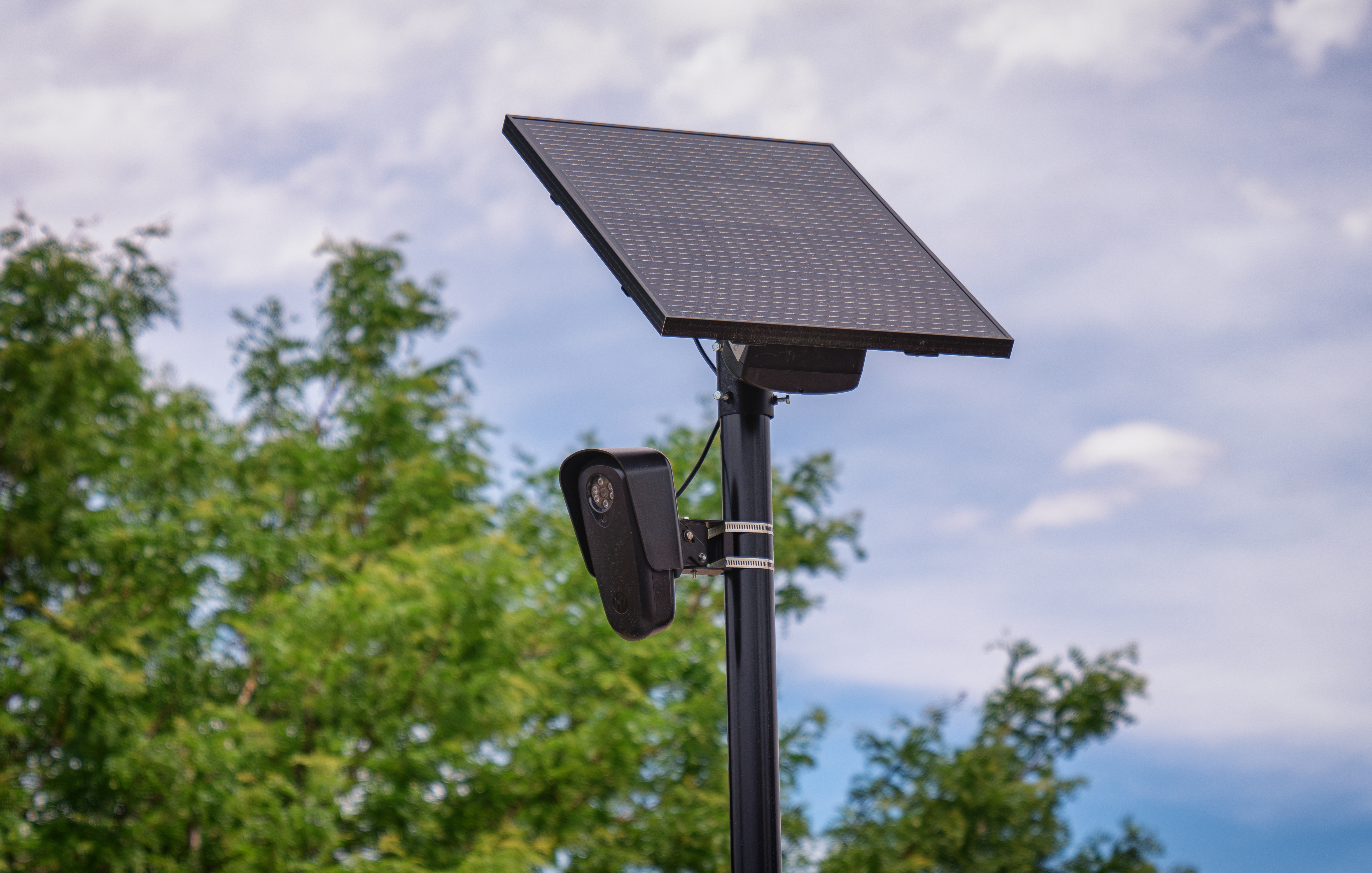
Police in The Woodlands area can keep scanning license plates without a warrant, a federal appeals court has ruled in a case that started with a Montgomery County traffic stop.
The U.S. Court of Appeals for the Fifth Circuit held in a published opinion March 17 that automated license plate readers do not constitute a search under the Fourth Amendment. The ruling in United States v. Porter, No. 25-60163, sets binding precedent for federal courts in Texas, Louisiana and Mississippi, according to Montgomery County Police Reporter.
The decision has direct implications locally. As of December 2025, the Montgomery County Sheriff's Office had deployed 80 Flock Safety cameras countywide, and 30 more are being added throughout The Woodlands under the Township's FY2026 budget. A separate state grant funded another 30 cameras elsewhere in the county.
The case behind the ruling
The case began in January 2024 when Officer Charles Hoggard received a Flock camera alert that a passing vehicle was linked to Elijah Porter, who had an outstanding arrest warrant for aggravated assault. Hoggard stopped the vehicle and found a Glock pistol fitted with a machine gun conversion switch under the driver's seat.
Porter challenged the stop, arguing the plate reader amounted to an unconstitutional warrantless search. Judge Jerry E. Smith, writing for a three-judge panel that included Judges Jacques Wiener and Stephen Higginson, disagreed.
"Drivers have no reasonable expectation of privacy in their movements on public thoroughfares and … a license plate is 'constantly open to plain view' of anyone nearby," Smith wrote in the opinion.
The panel compared the Flock system to the beeper tracking the Supreme Court approved in United States v. Knotts, distinguishing it from the sweeping cell-phone location surveillance struck down in Carpenter v. United States. The court also rejected the argument that a plate reader alert must include a physical description of the driver before an officer can make a stop.
What it means for The Woodlands
At a May 28 Township Board meeting, Sheriff's Office and Flock Safety representatives told directors the cameras capture publicly visible vehicle information, do not use facial recognition and automatically delete data after 30 days, Hello Woodlands reported.
The Board unanimously accepted the report.
Representatives clarified that the Township does not operate the system, access camera data or maintain any agreement with Flock Safety. The cameras are owned and run solely by the Sheriff's Office. Flock requires users to provide a reason for every search and maintains audit logs.
The system has already produced results in Montgomery County. In a July 25 stabbing case in Conroe, officers used Flock cameras to track a suspect vehicle that fled the city and were alerted when it returned, leading to the arrest of Darrell Dill, 40, without incident, according to Woodlands Online. In a separate case, Conroe police used Flock to identify Logan Michael Parker after he kidnapped and sexually assaulted a pregnant convenience store clerk in April 2025. A Montgomery County jury sentenced Parker to two life terms on Aug. 6.
Limits of the ruling
The decision may not settle the question entirely. The Flock litigation tracker notes the court characterized the Montgomery County system as "a limited local system — no more than ten cameras." Whether the same reasoning applies to denser networks remains untested. A competing case, Schmidt v. City of Norfolk, involving a 176-camera system, is on appeal in the Fourth Circuit and could produce a circuit split.
The Montgomery County Sheriff's Office has not issued a public statement responding to the ruling.